Kharkiv Oblast, Ukraine | Manufacturer · Exporter · Private-Label Supplier


Edible Oil Packaging Solutions
Sunflower Oil Packaging for Retail, Wholesale and International Supply
The right packaging does more than contain edible oil (Sunflower Oil Packaging Types | PET, Drums, IBC, Flexitank
). It influences product protection, storage, handling, transport, shelf presentation and the information buyers need before placing an order.
At UKROIL STARGIDA, sunflower oil is a key focus of our edible oil sourcing and trading activities. Based in Ukraine, we welcome enquiries from businesses looking for sunflower oil and other edible oils for domestic distribution and international markets.
Our approach to packaging enquiries begins with understanding the intended use of the product. A retailer preparing a consumer-facing cooking oil range may require bottles and branded labels, while a food manufacturer or bulk distributor may need larger containers or a shipment format suited to its storage and handling facilities.
We invite importers, wholesalers, retailers, foodservice suppliers and commercial buyers to discuss their packaging requirements with us. Available options depend on the oil type, order quantity, packing arrangements and destination requirements.
Looking for edible oil packaging for your business? Tell us which product you need, the preferred packaging format, estimated quantity and destination so we can review the relevant supply options.
Packaging options designed around your product, your customers and your destination market.
Why Packaging Matters for Edible Oil
Sunflower oil and other edible oils move through different supply chains, from the packing stage to warehouses, distributors, retail shelves, commercial kitchens and manufacturing facilities. Packaging must be appropriate for the intended journey and the way the product will be stored, handled and used.
Product Protection
Suitable food-contact packaging helps protect the oil from external contamination and supports appropriate handling during storage and distribution. The container, closure and other packaging components should be suitable for the specific product and intended conditions.
Storage and Handling
Packaging should match the buyer’s storage capacity, handling equipment and expected consumption. Smaller containers may suit retail or occasional use, while larger formats can be more practical for businesses with higher oil requirements.
Retail Presentation and Brand Identity
For retail products, packaging contributes to how customers recognise and understand the product. Bottle shape, label layout, product information and carton presentation should align with the brand and the requirements of the target market.
Transport and Shipment Planning
Packaging affects how a shipment is arranged, secured and handled. Container dimensions, pallet configuration, total weight and destination logistics should be considered when preparing a commercial order.
Regulatory Information
Edible oil packaging may need to display specific product information according to the destination market. The applicable rules can cover product naming, net quantity, ingredient information, responsible business details, date marking, storage instructions, language and other required particulars.
The final packaging specification should therefore be agreed alongside the product specification and shipment requirements, rather than treated as a separate afterthought.
Our Edible Oil Packaging Options
Different buyers need different formats. The following are packaging categories that can be discussed during an enquiry. Actual availability, container sizes and packing services must be confirmed for the specific product and order.
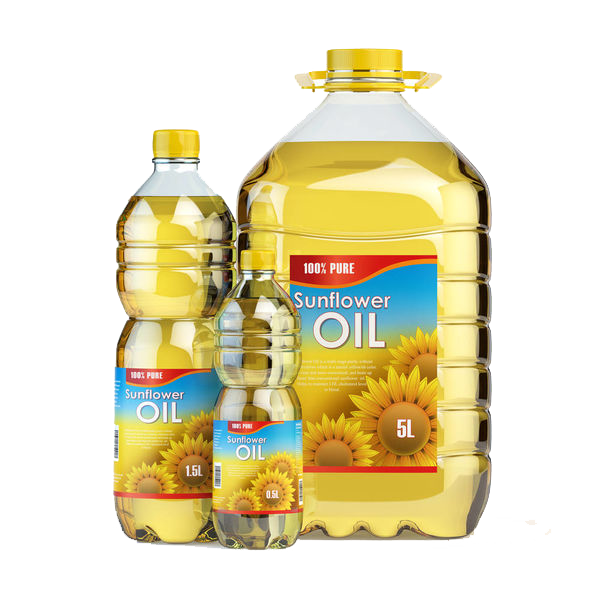
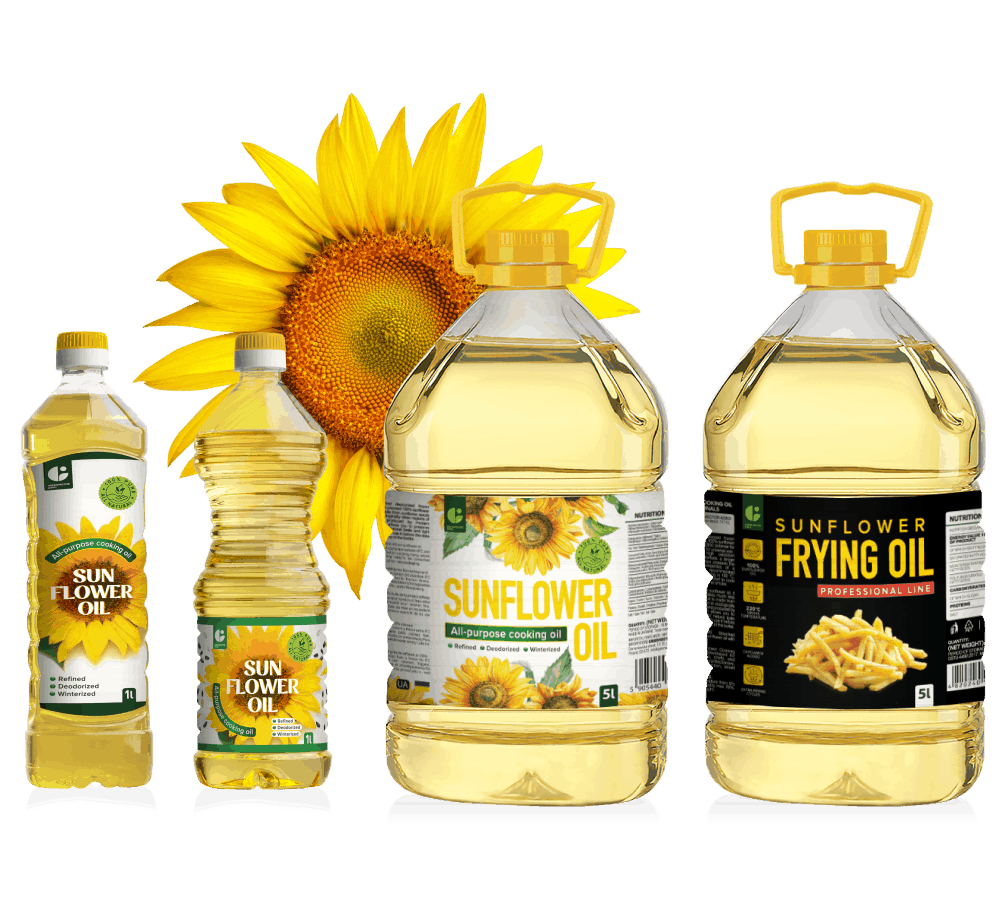
1. Bottled Sunflower Oil
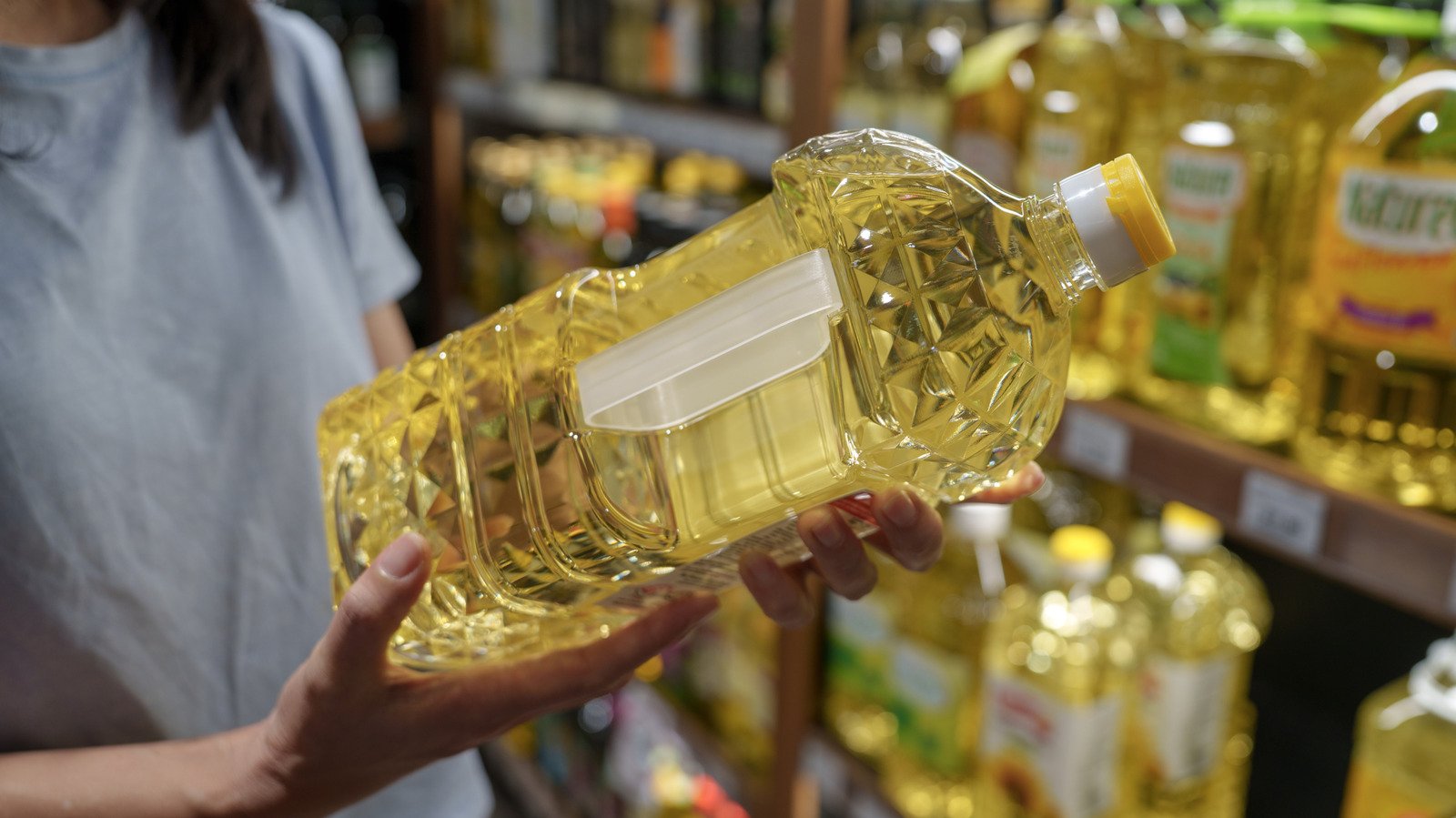
Bottled sunflower oil is commonly considered for supermarkets, grocery retailers, independent shops and consumer-facing brands.
This format may suit businesses developing a branded cooking oil range or supplying ready-to-sell products to retail channels.
When enquiring about bottled oil, buyers should identify:
- Preferred bottle capacity.
- Packaging material and closure requirements.
- Label language and artwork status.
- Carton configuration, where relevant.
- Estimated order quantity.
- Destination and delivery requirements.
These details help establish whether the requested presentation is feasible under the proposed supply arrangement.
2. Small and Medium Retail Containers
Smaller containers may suit household consumption and retail sales, while medium-sized formats may be appropriate for customers who purchase cooking oil in larger quantities.
The best format depends on local buying habits, shelf space, price positioning, transport requirements and the intended customer.
If your business has a preferred size or an existing retail packaging standard, include it in your enquiry. Available formats must be checked before a quotation is confirmed.
3. Larger Containers for Foodservice and Wholesale
Restaurants, catering companies, hotels and wholesale suppliers may prefer larger containers that reduce the frequency of replenishment and suit their operating needs.
The appropriate capacity depends on oil consumption, storage arrangements, safe handling and the buyer’s distribution model.
Businesses supplying commercial customers should also consider how containers will be moved, opened, stored and used at the final destination.
4. Drums and Intermediate Bulk Containers
Depending on the product and confirmed supply arrangements, commercial buyers may wish to enquire about drums or intermediate bulk containers (IBCs).
These formats can be relevant to certain foodservice, industrial and bulk-handling applications. Suitability depends on food-contact compatibility, the oil specification, handling equipment, transport requirements and the intended receiving facilities.
The availability of particular container sizes, liners, closures and handling configurations must be confirmed for the order.
5. Bulk Sunflower Oil Transport
Bulk transport may suit large-volume buyers, food manufacturers and distributors with suitable receiving and storage infrastructure.
Depending on the route and the agreed logistics arrangement, enquiries may involve flexitanks, tank containers or other appropriate bulk transport systems.
The choice should consider product compatibility, transport conditions, loading and unloading facilities, shipment size and the buyer’s receiving capabilities. Bulk formats are not equivalent to finished retail packaging and require a different handling and logistics plan.
Private Label and Custom-Branded Oil Packaging
Businesses launching their own edible oil brand may require packaging that carries their brand name, product information and visual identity.
UKROIL STARGIDA welcomes enquiries from buyers exploring private-label sunflower oil and other edible oil products, subject to the availability of the requested product and the feasibility of the packaging arrangement.
Develop a Consistent Brand Presentation
An own-brand product should have a clear and consistent identity. Buyers may need to consider the brand name, label artwork, product description, colour scheme, language and presentation across individual containers and outer cartons.
If you already have a label design, provide it with your enquiry. If your design is still in development, identify the target market and proposed product format.
Prepare the Required Label Information
Depending on the destination and product, the label may need to include the product name, net quantity, ingredient information, nutrition information where required, responsible business details, batch identification, date marking, storage instructions and other mandatory particulars.
Country-of-origin statements, language requirements and additional declarations depend on the applicable rules and the actual product. Any organic, halal-certified or non-GMO claim must be supported by appropriate evidence for the product concerned.
Confirm Artwork and Printing Arrangements
Before production or packing is arranged, the parties should establish who is responsible for supplying artwork, checking label content, arranging printing and approving the final design.
Custom labels, printing and branded packaging are not automatically included in every supply arrangement. Their availability, cost, lead time and responsibilities must be confirmed for the individual project.
Packaging for Different Buyer Requirements
Retailers and Supermarket Suppliers
Retail-focused buyers may prioritise shelf presentation, container consistency, barcode requirements, label language and carton handling. The packaging should suit the retailer’s product range and the regulations governing food products in the destination market.
Importers and Distributors
Importers and distributors may need to balance packaging suitability with shipment volume, storage capacity, local customer preferences and transport costs.
The destination market, delivery terms and required documentation should be established early so the proposed arrangement can be assessed as a whole.
Foodservice and Catering Businesses
Commercial kitchens and catering suppliers often focus on practical handling, container capacity, storage and the frequency of replenishment. The correct format depends on the operating environment and the volume of oil used.
Food Manufacturers
Food manufacturers may purchase oil as an ingredient rather than as a finished consumer product. Their requirements can involve bulk handling, compatible receiving facilities, product specifications and technical documentation.
Packaging and transport decisions should align with the manufacturer’s equipment, storage arrangements and production needs.
Bulk Buyers
Bulk buyers need to consider shipment configuration, loading and unloading, storage capacity and the suitability of the transport system for the product.
The final arrangement depends on the volume, route, product requirements and available logistics options.
Packaging Materials and Product Compatibility
Packaging materials must be suitable for the product they contain and for the expected storage and transport conditions.
For edible oils, relevant considerations may include the container material, closure, seal integrity, resistance to leakage, food-contact suitability and protection against conditions that can affect product quality.
Food-Contact Suitability
Materials that come into contact with the oil should be appropriate for the product and comply with the requirements applicable to the intended market.
Buyers who have specific packaging standards or food-contact documentation requirements should identify them before the order is confirmed.
Closure and Seal Integrity
The closure and seal are important elements of the overall package. They should be suitable for the container, product and handling conditions and help reduce the risk of leakage or contamination.
Light, Heat and Storage Conditions
Exposure to light, oxygen and excessive heat can contribute to quality deterioration in edible oils. Packaging selection and storage arrangements should therefore be considered together with the product’s handling requirements.
Packaging alone does not guarantee a particular shelf life. Shelf-life claims must be supported by appropriate product information and the conditions under which the oil is packed and stored.
Export Packaging and Shipment Preparation
For international orders, packaging decisions should be made alongside shipment planning. A container that works for a domestic retail order may not be suitable for a bulk export shipment or a buyer with different unloading facilities.
UKROIL STARGIDA is based in Ukraine and welcomes domestic and international enquiries about edible oil supply. Export-related packaging discussions may include the following considerations.
Destination Requirements
Different markets can have different food-labelling, packaging, import and documentation requirements. Buyers should identify the destination country and confirm the rules that apply to their product before finalising the packaging.
Cartons, Pallets and Shipment Configuration
Where packaged goods are shipped in cartons or on pallets, the arrangement should be suitable for handling, storage and transport. The buyer’s preferred configuration should be discussed alongside container loading and destination requirements.
Bulk Transport Arrangements
Bulk shipments require suitable transport equipment and compatible receiving facilities. The product, transport system, route and handling procedure should be assessed before the arrangement is confirmed.
Export Documentation
Depending on the transaction, export and transport documents may include a commercial invoice, packing list, transport document, origin documentation and product-specific documents where required and available.
The actual document set depends on the product, origin, destination and agreed transaction. Required documents should be identified early and verified for the specific shipment.
Delivery Terms
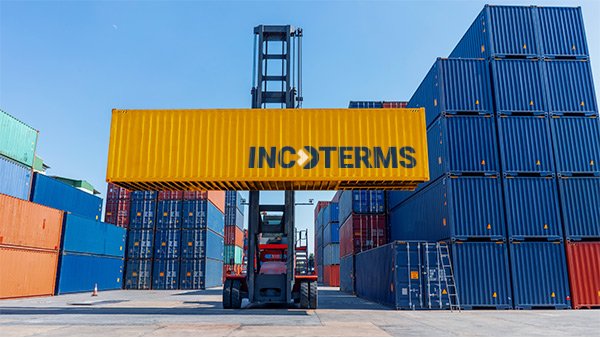
The buyer and seller should agree the delivery term and clarify the respective responsibilities for transport, costs and risk. Incoterms such as EXW, FOB, CIF or DAP may be relevant depending on the shipment, but their suitability must be assessed for the particular route and arrangement.
How UKROIL STARGIDA Handles Packaging Enquiries
We begin by clarifying what the buyer needs, then identify the details that must be checked before a commercial proposal can be prepared.
Step 1: Select Your Oil Product
Tell us whether you require refined sunflower oil, high-oleic sunflower oil, crude sunflower oil or another edible oil. If you have a product specification, attach it to your enquiry.
Step 2: Describe Your Packaging Preference
Specify whether you are looking for retail bottles, larger commercial containers, drums, IBCs or a bulk transport arrangement.
These are enquiry categories rather than a guarantee that every format is currently available.
Step 3: Provide Quantity and Order Frequency
Share the estimated quantity for your first order and indicate whether you expect repeat purchases. Order size can influence packaging feasibility, shipment planning and the commercial proposal.
Step 4: Identify Branding Requirements
If you need private-label packaging, explain whether the artwork is ready, what language the label requires and which product details must appear on the package.
Any printing or customisation services must be confirmed as part of the specific arrangement.
Step 5: Confirm Destination and Delivery Requirements
Tell us where the oil needs to be delivered and whether you have a preferred delivery term. For international orders, identify any known import, labelling, certification or documentation requirements.
Step 6: Review the Proposed Arrangement
Before proceeding, confirm the product, specification, packaging format, quantity, pricing basis, documentation and delivery responsibilities.
An order should only be treated as final once the relevant terms have been agreed in writing.
Why Discuss Packaging with UKROIL STARGIDA?
Ukraine-Based Sourcing and Trading
UKROIL STARGIDA is based in Ukraine and welcomes enquiries from buyers operating within the country and in international markets.
Sunflower Oil as a Core Product Focus
Sunflower oil is a central part of our edible oil business focus. We welcome discussions about product requirements, packaging preferences and the commercial details of potential supply arrangements.
Packaging Considered Alongside the Product
The packaging decision should reflect the oil type, intended application, customer channel and delivery destination. We encourage buyers to share these details early.
Enquiries for Different Commercial Channels
We welcome enquiries from retailers, wholesalers, importers, foodservice suppliers, food manufacturers and bulk buyers. Each project is considered according to its specific requirements and the options that can be verified.
Clearer Requirements Before Commercial Commitment
Product availability, packaging feasibility, label responsibilities, documentation, pricing and delivery terms should be clarified before an order is finalised.
Frequently Asked Questions About Edible Oil Packaging
What packaging formats can I enquire about?
Depending on the product and supply arrangement, buyers may enquire about retail bottles, larger commercial containers, drums, IBCs or bulk transport options. Availability must be confirmed for the requested product and order.
Can I request private-label sunflower oil packaging?
You can include your private-label requirements in an enquiry. The product, packaging format, artwork, printing arrangements and label responsibilities must be reviewed and confirmed before the project proceeds.
Can I choose my own bottle size?
You can state your preferred bottle size, but the available formats depend on the product and packing arrangements. Confirm the size and packaging feasibility before finalising the order.
Can you arrange custom labels?
Custom labelling or printing may be discussed as part of a private-label enquiry. The availability, cost, lead time and responsibilities for artwork and approval must be confirmed with the relevant supply and packing partners.
Which packaging is suitable for bulk sunflower oil?
The suitable format depends on the order volume, transport route, oil specification, receiving equipment and storage facilities. Bulk options may include appropriate flexitank, tank-container or other transport arrangements where available and suitable.
Does packaging affect the quality of sunflower oil?
Packaging can help protect oil during handling and storage, but the result depends on material suitability, closure integrity, storage conditions and transport. The product must also be handled according to its requirements.
Can packaging be prepared for international export?
Packaging for an international shipment should be assessed against the product, destination requirements, shipment configuration and available logistics. Buyers should share their destination and any known packaging or labelling rules before the order is confirmed.
What information should I include in a packaging enquiry?
Provide the oil type, preferred packaging format, estimated quantity, destination, branding requirements and target delivery date. Include your product specification, artwork or packaging standard if available.
Request an Edible Oil Packaging Quote
The right packaging starts with understanding the product and the business it needs to serve.
Whether you are sourcing bottled sunflower oil for retail, evaluating private-label packaging or enquiring about larger commercial and bulk formats, UKROIL STARGIDA welcomes your requirements.
Tell us which oil you need, how you want it packaged, the quantity you expect to purchase and the destination. Our team can then review the relevant sourcing and supply options and identify what needs confirmation.

Trusted Across Six Sectors
Ingredient oil for sauces, snacks, bakery and ready meals.
Bottled and private-label units for shelves.
Frying and cooking oil for kitchens and catering
Volume supply for distribution networks.
Feedstock oil for non-food applications.
End-to-end OEM bottling under your label.
Help Center For Customers
Our Mission
Our mission is to connect customers in Ukraine and international markets with quality sunflower oils and edible oils through responsible sourcing, reliable supply, clear communication and professional export coordination.
We are committed to making Ukrainian oil products accessible to buyers while building dependable, long-term relationships based on quality, consistency and trust.
Quality oils. Reliable sourcing. Global supply.
Our Vision
Our vision is to establish UKROIL STARGIDA as a trusted Ukrainian sourcing and export partner for quality sunflower oils and edible oils, serving customers across Ukraine and international markets.
We aim to build strong, lasting relationships with buyers, distributors and supply partners by providing dependable oil products, responsive communication and professional export support.
As we grow, our focus remains on expanding our reach, strengthening our supply network and making quality Ukrainian sunflower and edible oils accessible to more customers around the world.
Trusted Ukrainian sourcing. Quality oils. Reliable global supply.
Our Commitment to Customers
At UKROIL STARGIDA, we understand that sourcing sunflower oil and edible oils internationally involves more than simply finding a product. Buyers need reliable information, clear communication and confidence that their requirements are properly understood from the initial inquiry through supply and delivery.
Our role is to make the sourcing process as straightforward and dependable as possible.
We work to build lasting commercial relationships based on quality, consistency, transparency and mutual trust. From product specifications and quantities to packaging and export requirements, we take the time to understand each customer's needs and provide practical supply solutions.
Whether you are a wholesaler, distributor, importer or commercial buyer, UKROIL STARGIDA is committed to connecting you with quality sunflower oils and edible oils sourced from Ukraine.
Quality oils. Trusted sourcing. Reliable global supply.
From Ukraine to Global Markets
UKROIL STARGIDA connects quality Ukrainian sunflower oils and edible oils with customers and commercial buyers across Ukraine and international markets.
Our international focus enables us to serve wholesalers, distributors, importers and businesses seeking dependable Ukrainian oil products for their markets and operations.
As we continue to grow, our commitment remains centered on responsible sourcing, consistent product quality, clear communication and reliable supply relationships.
From Ukrainian producers and suppliers to customers around the world, UKROIL STARGIDA works to make quality sunflower and edible oils accessible through a straightforward and professional supply process.
From Ukraine. Quality oils. Global supply.
Our Business in Ukraine & International Markets
Ukraine is an important agricultural market with strong opportunities for the production and supply of quality oil products. UKROIL STARGIDA focuses on connecting these opportunities with customers seeking sunflower oils and edible oils for domestic, wholesale, distribution and international requirements.
Our approach goes beyond simply supplying a product. We take the time to understand each customer's requirements, including the type of oil, quantity, packaging, destination and delivery expectations, before working toward a suitable supply solution.
From the initial inquiry through product coordination and export arrangements, we aim to make the purchasing process clear, practical and straightforward.
Depending on the order and destination, our services may include product sourcing, supplier coordination, commercial communication, documentation support and export coordination.
Whether you are a wholesaler, distributor, importer or commercial buyer, UKROIL STARGIDA works to provide dependable access to quality Ukrainian sunflower oils and edible oils.
Quality Ukrainian oils. Clear communication. Reliable supply.
Start a Conversation With Ukroil Stargida
Email: enquiry@ukroilstargida.com
Phone: +380 63 959 0758
Address: Pryvokzalna St, 11, Vovchans'k, Kharkivs'ka oblast, 62500, Ukraine